Keyur Patelkeyur.ai

AI ADOPTION ADVISOR & CORPORATE TRAINER · CLAUDE SPECIALIST

From “we should use AI” to AI your team actually uses.

Teams have the mandate but not the habits. I build both: hands-on training, a clear adoption roadmap, and working systems.

AHMEDABAD · IST / EU / US OVERLAP

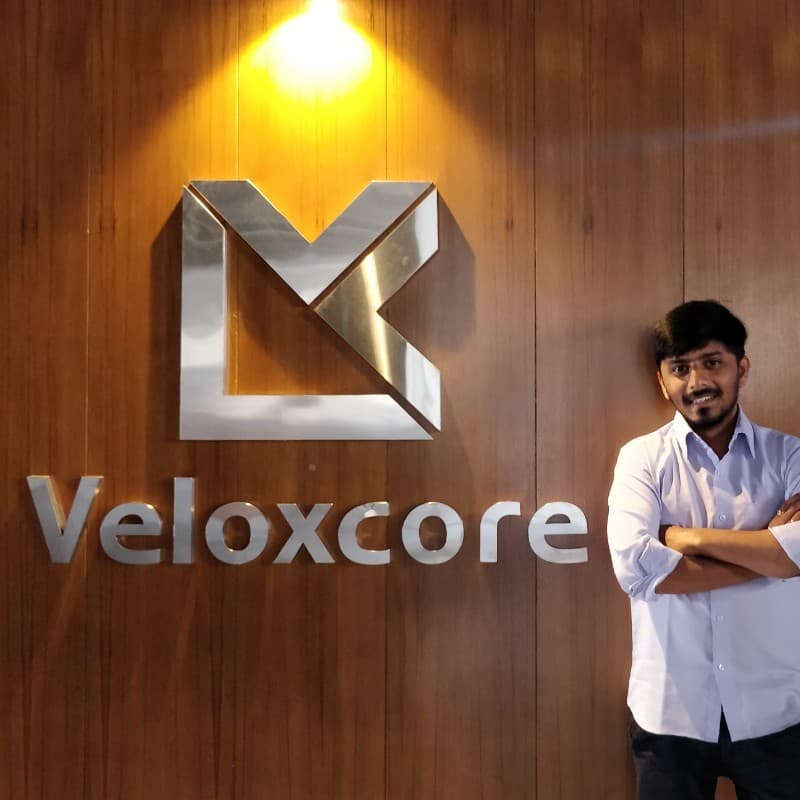
Fig. 01 · K. Patel, Ahmedabad
Keyur Patel, AI Adoption Advisor and Corporate Trainer
12+ yrs building softwareAI Lead, Sonetel · Claude specialist
Section 01 · Measured values

12+

YEARS BUILDING SOFTWARE

250+

PROFESSIONALS TRAINED

100k+

USERS SERVED IN PRODUCTION

Section 02 · Services

Five services. One practice.

Five ways teams work with me. Custom programs available on request. These five are the core.

SVC-01

AI Adoption Strategy and Roadmaps

A structured assessment of where you are, where AI pays off, and where it does not. You get a prioritized plan tied to business outcomes. It covers what to adopt, in what order, and what to skip. This is the work that stops teams from buying the wrong thing expensively.

SVC-02

Corporate AI Training and Workshops

Hands-on sessions built around the tools and tasks your people actually use. Delivered as focused executive briefings, half- or full-day team workshops, or multi-session programs. Anchored by five signature programs, with the full session catalog on the Corporate AI Training hub.

Table 01 · Signature programs · parts list

  • P-01EXECS

    AI for Executives

    What to bet on, what to ignore, and how to evaluate AI vendors before signing.

  • P-02POWER USERS

    Claude for Power Users

    Projects, Skills, Memory, and MCP for teams that have the tools but get little out of them.

  • P-03MULTI-SESSION

    AI Workflow Mastery

    A multi-session program taking professionals from ad-hoc AI use to systematic workflows across AI systems, prompt architecture, and AI-assisted development. Run previously as a paid cohort, now delivered to organizations.

  • P-04PRIVATE

    Claude Mastery (Private Small-Group)

    Hands-on Claude training for small professional groups. Premium-format corporate enablement: small room, real workflows, direct application.

  • P-05FRAMEWORKS

    Building Reusable Prompt Frameworks for Your Team

    Move from one-off prompts to durable, shareable frameworks the whole team can reuse.

SVC-03

Domain Automation Training with Claude Cowork

Applied training for a specific function on running and automating its own work with Claude Cowork and connected tools. The session is built around that domain’s real workflows: a finance team automating reconciliation and reporting prep, a real estate team handling listings, documents, and client follow-up, a pharma team managing regulated documentation and review trails. People leave able to run and maintain these workflows on their own.

SVC-04

Fractional AI Advisory

Ongoing guidance for teams that want a steady hand but cannot justify a full-time AI hire. It covers tool vetting, use-case review, team Q&A, and course correction as models change, structured as a monthly relationship.

SVC-05

Scoped Proof of Concept

A time-boxed pilot that turns one AI idea into a working proof and a clear recommendation. You pick the use case with the highest payoff or the highest uncertainty, and the engagement produces a functioning prototype, an honest read on whether it is worth taking further, and what production would actually require. Two recent products ran through this in 15 days each, in different domains, and both shipped as working products rather than prototypes. The deliverable is a decision, backed by something real your team can see and test. Deeper build work, when warranted, runs as a follow-on rather than an assumed next step.

Section 03 · Programs & guides

Explore programs and guides.

Two ways in. Adoption programmes for a company that needs AI to land across departments, and engineering work for teams changing how they build software. Most engagements start in one and grow into the other.

Section 04 · Proof

I teach this. I run it. I build it.

All three are real and current. The evidence below.

  1. A · Teach

    The training practice, 250+ professionals trained

    • FLAGSHIP · REAL ESTATE
    • SERVICE COMPANY
    • COHORT
    • PRIVATE GROUP
    • PUBLICATION
  2. B · Run

    The adoption practice, running now

    • SKILLS LIBRARY
    • COWORK WORKFLOWS
    • PLUGINS & MCP
    • AUTOMATIONS
    • ADOPTION PLAYBOOK
  3. C · Build

    The production engineering

    • RAG
    • AGENTIC
    • AUTOMATION & MCP
    • IDEA TO POC
Three practices run in parallel: training, where 250+ professionals have come through corporate programmes and cohorts; an organisation-wide Claude adoption practice running now; and production AI engineering serving 100k+ users.
A · The training practice, 250+ professionals trained
  1. FLAGSHIP · REAL ESTATE

    Shivalik Group, a group-wide rollout still running

    70+ people trained across IT, Sales and adjacent teams at a premium Ahmedabad real estate developer. Ten hands-on sessions with the IT team on their own systems, a separate Sales track now in progress built for research, drafting and client communication, and a second group entity onboarding for its own programme. The part worth reading is that it grew on its own: training that does not land does not get extended into a department where the buyer has to argue the value again.

    Read the case study
  2. SERVICE COMPANY

    Internal AI training program, 40+ engineers, 40% faster

    As engineering manager at a services company I designed and ran a two-month internal AI training program centred on Cursor and Claude, embedded in the team’s own codebase and conventions rather than a demo project. It produced a 40% speed improvement in development workflows measured against the pre-program baseline, and reduced token spend by pairing the right tool with the right job. 40+ engineers came through it. The outcomes stuck because the program was built around the team’s real standards and delivered by someone in the team day to day.

  3. COHORT

    AI Workflow Mastery, paid cross-functional cohort

    An end-to-end AI training curriculum spanning AI systems and research tooling, prompt architecture, and AI-assisted development, designed and then run as a paid cohort under the AiPromptsLabs umbrella. 25+ attendees across seven role categories: QA, managers, engineers, founders, designers, sales and marketing, because the patterns of effective AI use cut across roles rather than sitting inside one. Attendees reported measurable improvement in the speed and quality of their AI workflow during and after the sessions, and the WhatsApp community that formed around it is still active, so the knowledge kept compounding after the training ended. People paid for the curriculum and it stood on its own.

  4. PRIVATE GROUP

    Claude Mastery, private small-group training

    Hands-on Claude training delivered to small professional groups. This is the format premium corporate enablement usually takes: small room, real workflows, direct application.

  5. PUBLICATION

    AiPromptsX.com, published and ongoing practice

    A knowledge hub of prompt frameworks, original research, worked examples, and a structured prompt-engineering course that I build and run myself: 110+ blogs, 100+ prompts in the working library, 20+ frameworks designed for real work rather than demos, and 300K+ impressions over the last 12 months across LinkedIn, the blog and direct readership. The frameworks teams learn in my workshops are documented in the open there. Much of the AI training market recycles other people’s material. This is original work a buyer can read before hiring me, which shows the training rests on a live practice.

B · The adoption practice, running now
  1. SKILLS LIBRARY

    An organisation-wide Claude Skills library

    Skills built at Sonetel and used across the organisation every day, not by a single department. A brand voice Skill for customer-facing communication, a sales voice and tone Skill for outreach and proposals, an internal tone Skill for ops documentation, and task-specific Skills for the repeated workflows each function runs. Consistent output stops depending on who happens to be writing that day.

  2. COWORK WORKFLOWS

    Cowork workflows inside the tools the team already uses

    Multi-step agentic work running across Drive, Gmail, Calendar, Slack and the project tools the team already lives in. Cowork is what moves Claude out of a chat window and into the same systems everyone else works in, which is the difference between a tool people try and a teammate people rely on.

  3. PLUGINS & MCP

    Plugins and MCP integrations into the internal systems

    Integrations connecting Claude to CRM, ticketing, project management and team-specific tooling, used by multiple teams rather than isolated to one workflow. This is the unglamorous integration layer most adoption efforts skip, and the layer most adoption efforts then stall on.

  4. AUTOMATIONS

    Scheduled and event-triggered automations

    The recurring patterns that should not need a person in the loop. Industry news turned into draft posts in the company tone. Weekly reports generated from raw data without anyone opening a spreadsheet. Repeated content tasks compressed from hours to minutes.

  5. ADOPTION PLAYBOOK

    The written playbook engineering, support, sales and marketing follow

    Not a slide deck. A working document covering review gates so AI drafts get human approval before anything ships, security guardrails so sensitive data stays out of prompts, centrally maintained prompt libraries so quality does not depend on the author, and onboarding patterns that get new hires to Claude proficiency in days rather than months. The playbook is the bridge between holding licences and changing how the work runs.

C · The production engineering
Fig. 02 · RAG

Advanced RAG platform for document intelligence

A multi-layer retrieval architecture over messy enterprise documents: mixed formats, scanned pages, complex tables, and domain vocabulary that off-the-shelf embeddings could not handle. Ingestion, retrieval, neural re-ranking, and generation were decoupled so each tunes independently, with a concept memory graph for multi-hop questions that single-shot RAG cannot answer. Retrieval relevance improved on internal evaluations, and the architecture held as document volume scaled into enterprise workloads.

Fig. 03 · AGENTIC

Persona-driven conversational system

Led a small team building distinct AI personas with consistent voice, memory, and behavior across thousands of concurrent conversations. The system was built for horizontal scale from the start, with a stateless API layer, vector-backed memory, and queue-based generation. It handled 10,000+ concurrent users in load testing and shipped to production with stable behavior, and the persona-prompt structure became a reusable template.

Fig. 04 · AUTOMATION & MCP

Workflow automation and MCP integrations

Production n8n and Zapier flows routing work through Claude for classification, structured-output validation, and downstream routing. MCP servers that expose internal APIs to Claude so it reads and acts inside existing systems without leaking credentials or rebuilding them. Internal Streamlit dashboards for side-by-side prompt comparison, cross-version output diffing, and structured failure logging, so prompt iteration is grounded in real data.

Fig. 05 · IDEA TO POC

Two products from idea to shipped, 15 days each

A compressed private engagement covering framing, scoping, design, build and ship. Two recent products ran through it in different domains: a B2C product for the entertainment industry, live in 15 days with the client CTO and product team working alongside me in structured sessions, and an assistive product built to support people on the autism spectrum, shipped on the same timeline. In both cases the outcome was a working product in users’ hands rather than a prototype or a deck, which is the part that makes the pattern worth repeating.

Note 1 · Delivery background (non-AI, for context)

I have also led large-scale production delivery, including a high-traffic, compliance-critical platform built to a fixed external deadline (60% load-time improvement, launched on schedule, passed a third-party compliance review), micro-frontend storefront architecture, and order processing at 10,000+ orders per hour. It is here only because owning systems at this scale shapes how I think about reliability and operations for AI in production.

Section 05 · Feedback

From people in the room

What participants take away from the sessions, in their words.

“We started with a training brief and ended up with a live AI practice inside the group. Keyur runs the engagement like a partner, not a vendor.”

Luvv A Sanwal
Founding team, Office of the CEO, Shivalik Group

“The IT sessions were hands-on with our own systems and codebase, not a demo project. My team is building Skills and workflows in Claude that stay with us after every session.”

Dharmesh Dabhi
AGM Information Technology, Shivalik Group

“The frameworks here taught me how to think about prompts properly, structuring what I want instead of rambling. I use the APE framework almost daily now for client projects, and the quality of AI output is night and day compared to before.”

Jeel Patel
General Dynamics, USA

“The AI Workflow Mastery session was highly practical, engaging, and packed with valuable insights. I learned how to effectively use AI tools like ChatGPT, Claude, Gemini, Perplexity, and Cursor in real-world workflows.”

Purav Modi
Senior Software Engineer, Tata Consultancy Services

“I found it highly practical, insightful, and packed with actionable ideas that I can apply in my daily work.”

Hemil Modi
Senior Software Developer, Cygnet.One

“What stood out the most was his ability to explain complex AI concepts in a simple and practical way.”

Jatin Patel
Technical Lead, Coforge

“I genuinely learnt a lot, and I’ve started applying those insights in my day-to-day work. I can already see the improvement.”

Vatsal Mehta
Project Manager - Technical, Dash Technologies

“The workshop was well-structured, insightful, and full of practical AI use cases.”

Himanshu Suthar
Web Designer

“What I liked most was that the session focused on practical usage rather than just theory. The demonstrations using different AI tools helped me understand where and how each tool can add value in day to day work.”

Parth Modi
Technical Lead, NOUS Infosystems, Bangalore

“The hands-on demonstrations and real-world examples brilliantly showcased how we can seamlessly integrate AI tools into our daily routines to boost productivity and efficiency.”

Dhaval Mehta
Manager, QA, Aavenir

“The focus on practical use cases and real-world applications made the content highly relevant and easy to connect with. It was great to see how different AI tools can streamline everyday tasks and improve efficiency.”

Siddharth Rathod
Lead SDET, ACL Digital

“It was an engaging and insightful experience that provided a practical understanding of how AI tools and workflows can be effectively applied in day-to-day work.”

Nidit Mehta
Lead SDET, ACL Digital

“The session made a real difference to how I work. Since then I’ve been using AI much more actively in my development, and I’ve built workflows around it. I still come back to the prompt architecture approach regularly, and my day-to-day way of working has genuinely changed for the better.”

Tushar Patel
Veloxcore

“I’ve attended quite a few AI-related discussions recently, but what stood out in this session was the focus on practical usage rather than just tools and concepts. The live demonstrations and workflow examples gave a much clearer picture of how AI can actually help us in our day-to-day work.”

Dhrumil Soni
Lead Quality Assurance Engineer, Tech Holding

“The session gave me a completely different perspective on AI. Instead of focusing only on prompting, it showed how to integrate AI into a practical workflow that delivers real productivity gains.”

Tejas Gohel
Founder, TretaGen

“Keyur is among the early adopters of using generative AI in planned software engineering.”

Hitesh Pamnani
Senior Consultant

“What stood out most was the focus on improving productivity through structured AI workflows rather than simply exploring individual tools.”

Dishant Vala
Sr SDET Engineer, ACL Digital

“The session provided practical insights into AI-powered development workflows, including prompt engineering, AI agents, context management, code generation, debugging assistance, and workflow automation.”

Kush Patel
SDE-3, Highlevel

“Instead, it focused on how to use them effectively in day-to-day work to save time, improve productivity, and get better results.”

Nirav Soni
Sr. SDET Engineer, ACL Digital

“I now use AI regularly for coding, debugging, understanding requirements, and exploring different implementation approaches.”

Shraddha Rathod
Senior Software Engineer, Veloxcore

“What stuck with me the most was learning how to use AI more systematically instead of just treating it as a chatbot.”

Jayni Patel
Founder, Virtueaze
01 / 21
Section 06 · Writing

Read before you hire.

A knowledge hub for prompts and prompt frameworks that I built and run myself. Original research, writing, reusable frameworks, worked examples, and a structured course on prompt engineering. The same frameworks teams learn inside my workshops are documented and published there in the open.

Many “AI trainers” are recycling other people’s content. AiPromptsX is original work you can read before hiring me: proof that the training rests on a real, ongoing practice, and that I’m still doing the work, not just talking about it.

Every framework I teach has been tested in front of an audience that pushes back. Developing the teaching practice in public each week is what keeps the training material current with how Claude actually behaves now, rather than how it behaved a year ago.


Fig. 06 · AiPromptsX.com, contents

AiPromptsX.com

Prompts · Frameworks · Research · Worked examples · Free course

THE PRACTICE, BY VOLUME

  • W-01300k+impressions over 12 months
  • W-02110+blogs published
  • W-03100+prompts in the working library
  • W-0420+prompt frameworks

Prompt Engineering Mastery, a structured course with active enrollment, sits alongside the free material.

Visit AiPromptsX.com
Section 07 · Principles

Five things that shape every engagement.

  1. P-01

    Discovery first

    Before architecture or curriculum, I want to understand what “good” looks like for your team and what bad output actually costs. That conversation separates a useful engagement from an expensive wrong turn.

  2. P-02

    Outcomes over tools

    Nobody’s success is measured by which model they used. Training and strategy are framed around what your team can do after the engagement that it could not do before.

  3. P-03

    Modular by default

    When building, I keep retrieval, prompting, and post-processing as independent layers with clear interfaces. When a model gets deprecated next quarter, you swap one component instead of rebuilding the system.

  4. P-04

    Honest about limits

    Part of adoption strategy is saying where AI is not the right answer yet. I would rather tell you that than sell you a project.

  5. P-05

    Ship the boring infrastructure

    Logging, monitoring, cost tracking, fallback logic. The work that makes AI survivable in production rather than impressive in a demo.

Section 08 · Stack

What I use, teach, and build with.

Tools in daily use across training and build work · not a logo wall.

Table 02 · Tooling specification

LLM stack
Claude (Fable 5, Opus 5, Sonnet 5, Haiku 4.5) · ChatGPT (GPT-5.6 Sol, GPT-5.6 Luna, Codex) · Gemini (3.1 Pro, 3.7 Flash) · Kimi K3 · NotebookLM
Claude developer stack (specialty)Specialty
Claude Code · Claude Cowork · Claude Design · Claude Skills · MCP · Anthropic API
AI coding and app builders
Claude Code · Cursor · Codex · Lovable · Replit · v0 · Bolt.new
Build stack
LangChain · LangGraph · LlamaIndex · Pinecone · Qdrant · OpenSearch · FAISS · LlamaParse · AWS Bedrock/SageMaker
Workflow automation
n8n · Zapier · custom webhook and API orchestration
Languages and app
Python · TypeScript · Node.js · SQL · React · Next.js · Streamlit
Section 09 · Track record

12+ years of building software.

The training stands on production work: systems still running, and the last several years spent on AI with Claude at the center.

  • R-01

    SonetelCURRENT

    AI Lead

    I lead AI strategy and engineering for a 40+ person SaaS VoIP product company, and own Claude adoption end to end across the organisation.

  • R-02

    Tech Holding

    Engineering Manager

    Led 15+ engineers across AI-driven projects, and designed and ran technical and AI training programs.

  • R-03

    Encora

    Tech Lead

    Product serving roughly 100,000 users.

Note 2 · Field observation

The guidance comes from someone still building and teaching production AI now. The question I care about is whether the system and the people around it can operate, scale, and debug it at 2am, well after the demo.

Section 10 · Process

From first call to shipped engagement.

A predictable rhythm. Fixed-fee where it makes sense, retainer where it does not. You always know what week you are in and what comes next.

  1. Free · 30 min

    Step 01

    Discovery call

    A focused conversation to understand your team’s current state, AI ambitions, and what “good” looks like. No deck. No sales pressure.

  2. 3–5 business days

    Step 02

    Engagement scope

    Written proposal with prioritized objectives, weekly milestones, success measures, and a flat-fee or retainer quote. Approve or push back; we iterate.

  3. 4–12 weeks typical

    Step 03

    Delivery

    Weekly check-ins, async-first updates, working artifacts shared throughout. You see progress in real terms, not in a slide deck at the end.

  4. Week of close

    Step 04

    Handoff

    Documentation, internal training session, and a 30-day implementation Q&A window. Optional fractional advisory continues monthly if you want a steady hand.

Every engagement runs the same four stages: a free 30-minute discovery call, a written scope in 3 to 5 business days, delivery over 4 to 12 weeks, and a handoff with documentation, a training session and 30 days of Q&A.
Section 11 · FAQ

Questions buyers usually ask first.

If the answer to your question isn’t here, that itself is useful information for the discovery call.

  • How do you charge?

    Fixed-fee where the scope is clear, retainer where it isn’t. I share the rate range in our discovery call so you can decide before any commitment. No hourly billing: you should know what you’re committing to, and I should be incentivized to ship outcomes, not log time.

  • How fast can we start?

    Discovery call typically within a week of first contact. Engagement scope and proposal in 3–5 business days after that. So roughly 2 weeks from first message to active engagement, depending on your side’s availability.

  • Do you subcontract the work?

    No. You work directly with me. If the engagement needs a larger team, I’ll say so upfront and we’ll discuss who’s right rather than me hiring on your behalf. The credibility on this site is mine; you should get the engineer behind it.

  • How long is a typical engagement?

    Build work: 4–12 weeks. Workshops: half- or full-day, on-site or remote. Advisory retainers: month-to-month with 30-day notice. I prefer time-boxed scopes over open-ended retainers for new clients; easier to evaluate fit before committing further.

  • What if AI isn’t the right answer for our problem?

    I’ll tell you. Saying no isn’t bad business. Part of an honest adoption strategy is identifying where AI is the wrong tool, usually because the underlying process isn’t ready, the data isn’t there, or a simpler solution exists. I’d rather skip a project than ship one that doesn’t help.

  • Do you take on clients outside India or Asia?

    Yes. Most of my work is remote. I overlap with US Pacific in the mornings (India time) and EU/UK in the afternoons. For workshops that need to be on-site, I travel; cost of travel is folded into the engagement quote.

Section 12 · Contact

GET IN TOUCH

Let’s talk.

If your team is trying to actually use Claude, or to work out what is worth building before spending on it, let’s talk. I take on a limited number of engagements at a time.